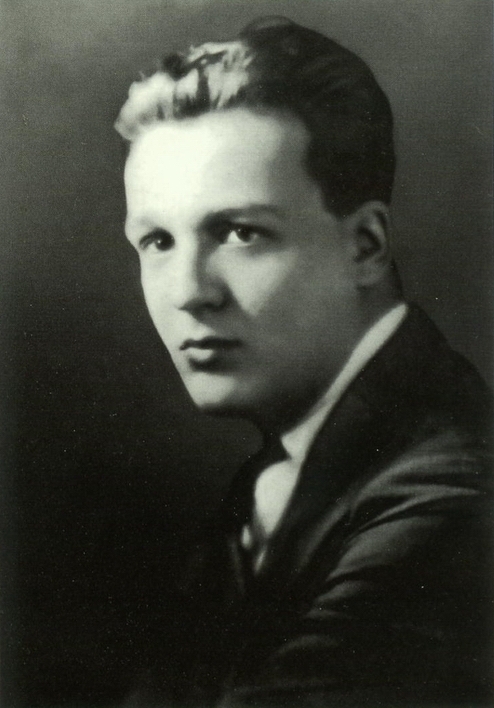
Stanley G. Weinbaum: The American SF Author Who Revolutionized Aliens
In the vast pantheon of science fiction, certain authors shine brightly, not just for their storytelling prowess but for fundamentally altering the genre's landscape. Stanley G. Weinbaum is one such visionary, an
Amerikanischer SF-Autor whose tragically brief career nonetheless sparked a revolution in how we imagine extraterrestrial life. Before Weinbaum, aliens in science fiction were often little more than thinly veiled humanoids – easily understandable, relatable, and frankly, a bit dull. Weinbaum dared to imagine something truly alien, entities whose psychologies and motivations were utterly foreign, challenging readers to embrace the boundless strangeness of the cosmos.
His most famous work, "A Martian Odyssey," published in 1934, wasn't just a story; it was a paradigm shift. It introduced beings so utterly different from humanity that communication became a puzzle, an exercise in empathy and observation rather than simple dialogue. This fresh perspective earned him fervent praise from contemporaries like H.P. Lovecraft and cemented his legacy as a pioneer who pushed the boundaries of imagination beyond the anthropocentric.
A Brief Life, a Lasting Legacy: Who Was Stanley G. Weinbaum?
Stanley Grauman Weinbaum was born in Louisville, Kentucky, in 1902, beginning a life that, though short, would leave an indelible mark on speculative fiction. His academic journey began with a practical pursuit – chemical engineering – but his innate curiosity soon led him to switch to English literature. This blend of scientific interest and literary sensibility would later serve his science fiction well. His university days, however, ended prematurely in 1923, marked by a colorful incident where he was accused of involvement in an exam fraud, reportedly writing a test under a friend's name as a dare.
For the next decade, Weinbaum worked in a cinema, nurturing his literary ambitions in his spare time. His initial foray into publishing was not in science fiction, but a romance novel titled "The Lady Dances," which found a publisher in 1933 and was serialized the following year. However, 1934 also marked the debut of his first and most celebrated science fiction short story, "A Martian Odyssey." It was a pivotal year, overshadowed by his severe illness: lung cancer. Despite his declining health, Weinbaum wrote prolifically, leaving behind a substantial body of work, much of which was published posthumously after his death on December 14, 1935, while he was still working on another romance novel, "Three Who Danced."
Though he dabbled successfully in multiple genres, even writing an operetta called "Omar, the Tent Maker" with music by his sister Helen Weinbaum Kasson, it is his science fiction that has resonated most strongly through the decades. His series of ten "Planetary" short stories, exploring the solar system, with "A Martian Odyssey" as its crown jewel, stands as a testament to his unique vision and remains his enduring contribution.
Beyond Green Men: Weinbaum's Alien Revolution
What made Weinbaum's aliens so revolutionary? Prior to his arrival, extraterrestrial beings in science fiction were largely projections of human fears or desires. They were often monstrous invaders or benevolent, super-intelligent beings, but rarely did they challenge the fundamental assumption that intelligence would manifest in ways we could readily grasp. As H.P. Lovecraft, an admirer and fellow innovator of cosmic horror, eloquently put it, Weinbaum "escaped the sickening hackneyedness in which 99.99% of all pulp interplanetary stuff is engulfed." Lovecraft lauded him for daring to think "of another planet in terms of something besides anthropomorphic kings and beautiful princesses and battles of space ships and ray-guns and attacks from the hairy sub-men of the 'dark side' or 'polar cap' region."
Weinbaum had, in Lovecraft's words, "the imagination to envisage wholly alien situations and psychologies and entities." His aliens were truly *other*. Consider Tweel from "A Martian Odyssey," a Tripod Martian with a trunk, a large head, and an unintelligible language. Communication between Tweel and the human protagonist, Jarvis, is not achieved through a universal translator or by learning a common tongue, but through an arduous process of shared experiences, observation, and attempts at understanding based on fundamentally different perceptions of reality. This was groundbreaking. It suggested that alien life might not just look different, but *think* differently, feel differently, and interact with the universe in ways humans couldn't easily fathom.
This approach was not just a narrative device; it was an intellectual challenge. It forced readers to consider the vastness of evolutionary possibilities and the potential for life to take forms and develop intelligences utterly outside human experience. This notion of incomprehensible alienness became a cornerstone for future science fiction, inspiring authors to create creatures that were not merely monsters or saviors but enigmatic beings that expanded the very definition of life. To truly appreciate Weinbaum's breakthrough, one might find it helpful to explore earlier sci-fi works and then compare them with his unique vision, highlighting just how significant his contribution was. For those interested in a deeper dive into the praise he received, particularly from Lovecraft, you can discover more in
From Lovecraft's Praise: Discovering Stanley G. Weinbaum's Sci-Fi.
Weinbaum's Wider SF Universe and Enduring Influence
Beyond his seminal short stories, Weinbaum's literary output included three science fiction novels: "The Black Flame" (which combines the novellas "Dawn of Flame" and "The Black Flame"), "The New Adam," and "The Dark Other." These works further showcased his imaginative scope, exploring themes of post-apocalyptic futures, superhuman evolution, and strange psychological phenomena. All three have been published by Heyne-Verlag in their Science-Fiction-Classics series, making them accessible to German readers and demonstrating their lasting literary merit.
Weinbaum's influence, though sometimes understated due to his short career, is profound. He set a new standard for alien conceptualization, encouraging subsequent generations of
Amerikanischer SF-Autors to create more complex, less anthropomorphic extraterrestrial beings. His work is a testament to the power of imagination, demonstrating how even a single groundbreaking story can reshape an entire genre. For newcomers eager to experience Weinbaum's genius, starting with "A Martian Odyssey" is highly recommended. It’s a relatively short read that perfectly encapsulates his revolutionary approach to alien life. Look for anthologies of classic science fiction; many include this essential story.
The Legacy of Visionaries: From Weinbaum to Asimov and Beyond
The landscape of science fiction is rich with diverse voices and groundbreaking ideas. Stanley G. Weinbaum, as an
Amerikanischer SF-Autor, laid crucial groundwork for how we perceive alien life, compelling us to consider the truly *other*. His contemporaries and successors, including another titan of the genre,
Isaac Asimov, would expand science fiction in myriad directions. While Weinbaum tackled the profound strangeness of non-human intelligence, Asimov, another prominent
Amerikanischer SF-Autor, often explored the ethical implications of robotics and the future of human society in his vast body of work.
These authors, each with their unique focus, collectively shaped our understanding of what science fiction could be. While we may not yet have encountered real-world aliens or perfected time travel or flying cars, as some authors envisioned, the intellectual framework for considering such possibilities was profoundly influenced by the imaginative leaps made by writers like Weinbaum and Asimov. Their stories challenged perceptions, expanded our mental horizons, and remain vital sources of wonder and speculation. The diversity of their contributions highlights the rich tapestry woven by American science fiction writers.
In conclusion, Stanley G. Weinbaum's impact on science fiction, particularly his pioneering approach to creating truly alien extraterrestrial beings, cannot be overstated. Despite his tragically short life, his work resonated deeply, inspiring a shift from simplistic, human-like aliens to complex, unfathomable entities that pushed the boundaries of imagination. His legacy as an
Amerikanischer SF-Autor is secure, a testament to the enduring power of a singular vision that dared to imagine the universe in all its profound strangeness. Exploring his stories is not just reading classic science fiction; it's witnessing a pivotal moment in the genre's evolution.