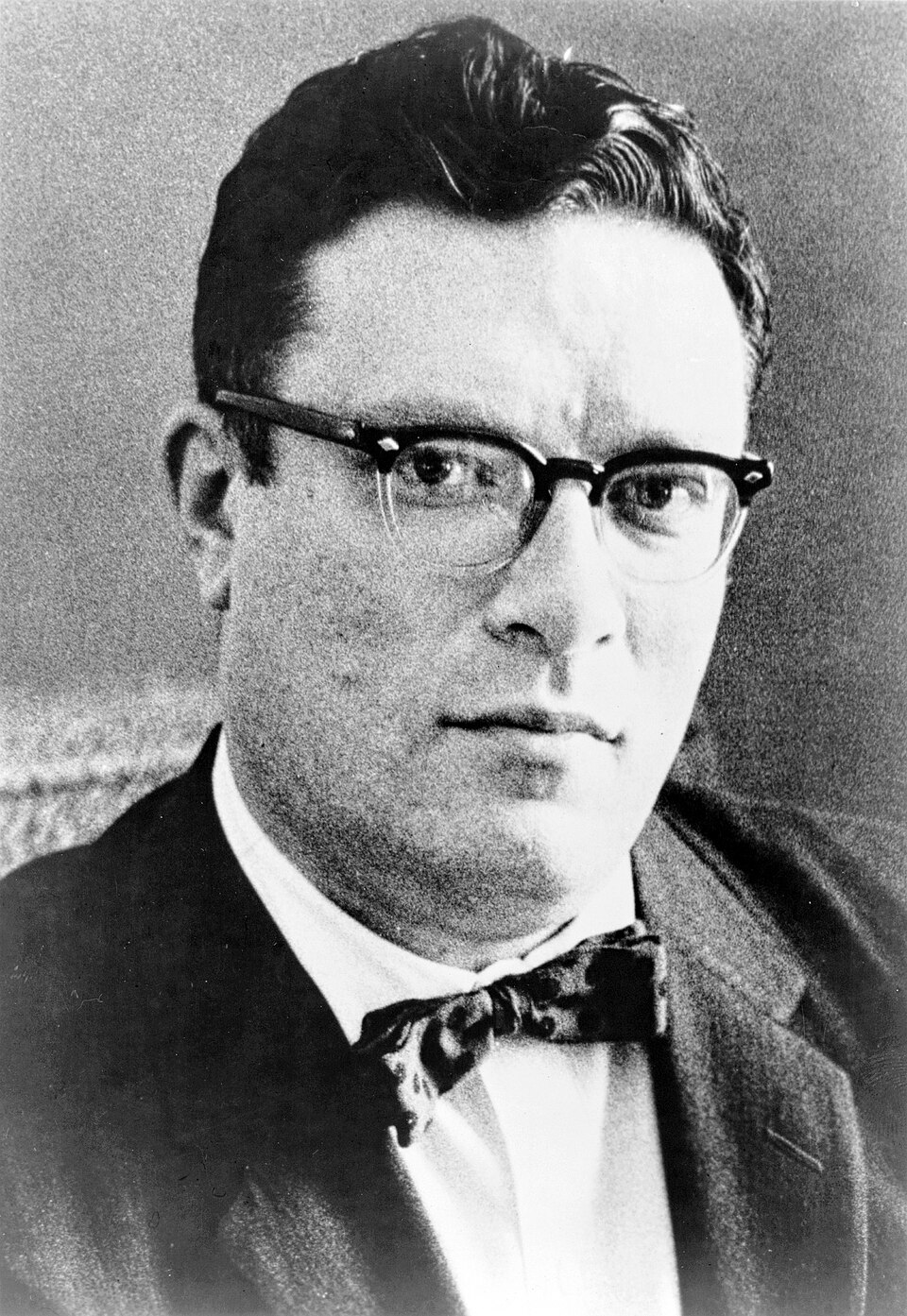
Isaac Asimov's Legacy: Fact-Checking Sci-Fi Future Predictions
Isaac Asimov stands as an unparalleled giant in the annals of science fiction, an "Amerikanischer Sf Autor Isaac" whose prolific pen graced nearly every category of the Dewey Decimal System. Renowned for his unparalleled ability to blend scientific rigor with captivating storytelling, Asimov wasn't just writing tales; he was meticulously constructing possible futures. For enthusiasts and scholars alike, there's a compelling allure in revisiting these visions, often decades after their inception, to embark on a fascinating journey of fact-checking what has – or hasn't – become our reality.
While science fiction authors rarely claim the mantle of prophet, the exercise of comparing their fictional worlds to our present technological and societal landscape offers profound insights into human innovation, foresight, and the unpredictable nature of progress. From the intricacies of artificial intelligence to the vast frontiers of space, Asimov's predictions offer a rich tapestry for examination.
The Visionary Scope of Isaac Asimov: Robots, AI, and the Cosmos
Perhaps no other facet of Isaac Asimov's extensive bibliography resonates more powerfully today than his contributions to robotics and artificial intelligence. Long before silicon chips powered our daily lives, Asimov not only coined the term "robotics" but also formulated the famous Three Laws of Robotics:
1. A robot may not injure a human being or, through inaction, allow a human being to come to harm.
2. A robot must obey the orders given it by human beings except where such orders would conflict with the First Law.
3. A robot must protect its own existence as long as such protection does not conflict with the First or Second Laws.
These laws, initially a plot device, have transcended fiction to become a foundational framework for ethical discussions in real-world AI development. While we don't yet have sentient, human-like "positronic" robots serving us coffee or navigating starships, the rise of sophisticated AI in everything from self-driving cars to advanced medical diagnostics directly engages with the ethical dilemmas Asimov explored. His stories anticipated the fear, trust, and co-dependence that would define the human-AI relationship, making him uncannily accurate in framing the *questions* we'd face, even if the *answers* are still evolving.
Beyond AI, Asimov was a fervent advocate for space exploration and colonization. His "Foundation" series, for instance, envisioned a galaxy-spanning human empire, built upon psychohistory – a fictional science that could predict the large-scale future of humanity. While we are still firmly confined to Earth (and its immediate orbital vicinity), Asimov's optimism about humanity's destiny among the stars continues to inspire. The International Space Station, the burgeoning commercial space industry, and renewed plans for lunar and Martian missions reflect a persistent human drive to conquer the cosmos, albeit at a slower pace than some of Asimov's more ambitious narratives suggested.
Beyond Technology: Asimov's Societal and Educational Forecasts
Asimov's gaze wasn't solely fixed on gadgets and rockets; he meticulously extrapolated societal and educational shifts that would accompany technological progress. He often envisioned highly urbanized populations living in self-sufficient, technologically advanced cities, a concept explored in works like *The Caves of Steel*. While we haven't retreated into fully enclosed, domed metropolises, the trend towards megacities and vertical living in densely populated urban centers shows an echo of his foresight. The increasing reliance on indoor climate control, vertical farms, and smart city infrastructure points towards a future that shares some architectural and logistical DNA with Asimov's urban visions.
His predictions regarding education are particularly striking. Asimov foresaw a future where personalized learning, facilitated by advanced computers and access to vast repositories of information, would largely replace traditional classroom settings. While he might have imagined this through the lens of a "Multivac"-like supercomputer, the reality of the internet, online learning platforms, and the immediate availability of knowledge through search engines like Google and AI assistants closely mirrors his vision. Students today can access an unparalleled wealth of information and tailor their learning paths in ways that were pure fantasy just a few decades ago, largely fulfilling Asimov's belief in democratic access to knowledge.
The Art of Prediction: Asimov vs. Other Sci-Fi Pioneers
When discussing the predictive power of science fiction, it's enlightening to consider the diverse approaches taken by various authors. Asimov, the "Amerikanischer Sf Autor Isaac," often grounded his predictions in plausible scientific advancement and logical extrapolation of existing trends. His futures felt attainable, often focusing on human ingenuity and the ethical challenges arising from technological progress.
However, other visionary American SF authors explored radically different dimensions of the "future." Consider
Stanley G. Weinbaum, another influential American SF author, whose brief but brilliant career in the 1930s revolutionized the portrayal of extraterrestrial life. Unlike many of his contemporaries who depicted aliens as mere caricatures or anthropomorphic foes, Weinbaum, as praised by H.P. Lovecraft, envisioned truly alien psychologies and biologies. His seminal story, "A Martian Odyssey," introduced bizarre, non-humanoid beings whose motivations and communication methods were utterly foreign.
Lovecraft himself lauded Weinbaum's ability to "envisage wholly alien situations and psychologies and entities."
While Asimov meticulously mapped out the human future with robots and starships, Weinbaum pushed the boundaries of biological and sociological imagination beyond human confines. This contrast highlights that "future prediction" in sci-fi isn't a monolith; it encompasses not only the technological advancements of our own species but also the boundless, imaginative possibilities of life and interaction across the cosmos. Both approaches, however different, enrich our understanding of what might be.
Lessons from the Future: Why Fact-Checking Sci-Fi Matters
Revisiting the predictions of Isaac Asimov and other sci-fi luminaries isn't merely a nostalgic exercise; it's a vital analytical tool. It offers several key insights:
* **Inspiration for Innovation**: Many scientists, engineers, and entrepreneurs readily admit that science fiction sparked their initial interest in their fields. Asimov's visions of AI, space travel, and advanced computing have undeniably inspired countless individuals to turn fiction into reality.
* **A Mirror for Progress**: Fact-checking sci-fi serves as a report card on humanity's progress. It shows us where we've excelled beyond wildest dreams (e.g., the internet's ubiquity) and where we've fallen short (e.g., routine interstellar travel).
* **Ethical Foresight**: Perhaps most importantly, authors like Asimov served as crucial early warning systems. By exploring the societal implications and ethical dilemmas of future technologies (like AI, genetic engineering, or advanced robotics), they give us a head start in contemplating the moral frameworks needed to guide our innovations responsibly. This proactive consideration of potential pitfalls is an invaluable, practical tip for navigating our rapidly evolving technological landscape.
* **Understanding Complexity**: The future is rarely linear. Asimov's accurate predictions often came with unforeseen caveats or in forms he couldn't have precisely imagined. This teaches us humility and emphasizes that complex systems like human society and technological development are influenced by myriad unpredictable factors.
In conclusion, Isaac Asimov, the quintessential "Amerikanischer Sf Autor Isaac," left behind not just a library of thrilling narratives but a comprehensive blueprint of potential futures. While not every prediction materialized exactly as he envisioned – aliens haven't landed, time travel remains a fantasy, and flying cars are still largely aspirational (though foldable phones, or "Klapphandys," which resemble his "picture phones," have certainly made their comeback) – his profound influence on our collective imagination and scientific endeavors is undeniable. Asimov's legacy continues to challenge us to think critically about where we are headed, reminding us that the best way to predict the future is, perhaps, to create it.